
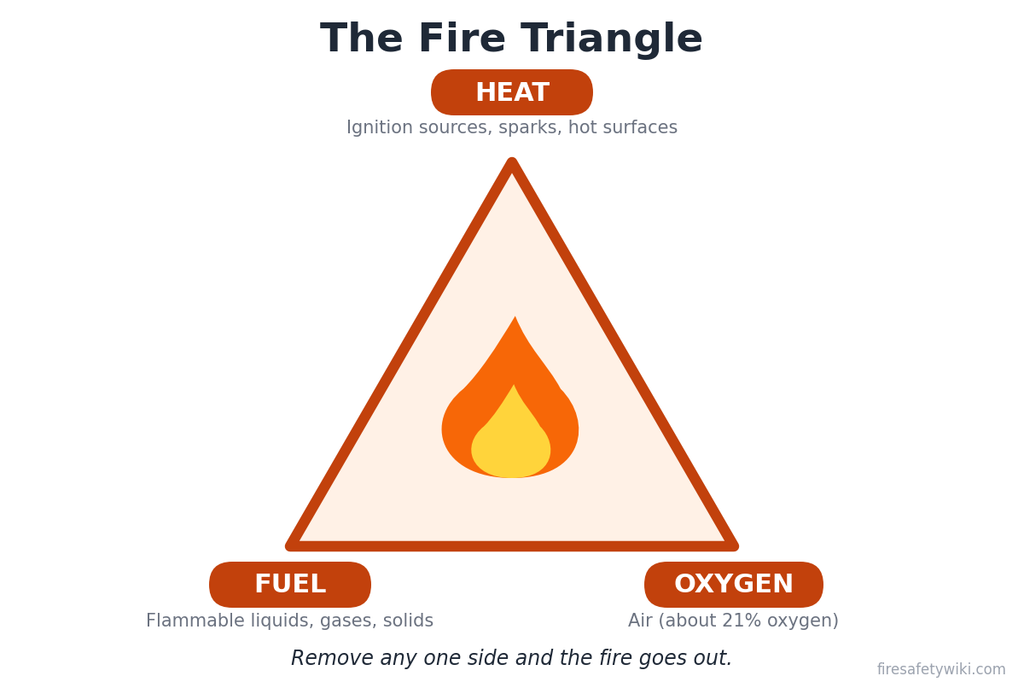
Definition: The fire triangle is a model showing the three things a fire needs to start and continue: heat, fuel and oxygen. Remove any one of them and the fire goes out.
Three sides and how to break them (small table):
| Side | What it is | Way to break it |
|---|---|---|
| Heat | An ignition source or heat that raises fuel to its ignition point | Cooling, for example water spray |
| Fuel | Any combustible solid, liquid or gas | Starvation, for example closing a valve to stop the supply |
| Oxygen | Air contains about 21% oxygen | Smothering, for example foam, a lid or inert gas |
Related terms: Fire Tetrahedron, Combustion, Fire Classes, Ignition Source, Flammable Liquid
Example: A small pan fire is put out by placing a lid on it, which cuts off the oxygen. In a plant, closing an emergency shutdown valve (ESDV) removes the fuel feeding a fire, water spray removes heat, and foam or inert gas smothers the flame.
Why it matters: The fire triangle is the basis for both fire prevention and extinguishing. Preventing a fire means keeping the three sides apart, for example by controlling ignition sources and fuel leaks. Choosing an extinguishing method means deciding which side to break. The triangle describes flaming combustion. The fire tetrahedron adds a fourth element, the chemical chain reaction, which explains why some agents, such as dry chemical powders, work.